
When we flick a light switch in the morning, we see the immediate result, but the intricate process of energy generation remains entirely hidden. Yet, while energy constitutes the fundamental resource of our civilisation (Smil, 2017, p. 385), it remains paradoxically invisible to the human eye in everyday life.
It is precisely at this juncture that a strategic problem arises: large-scale energy systems – be they opencast mines, power stations or modern wind farms – alter landscapes, living environments and social structures. In order to generate public support (goodwill) for these massive physical interventions, the industry has always relied on targeted communication tools (Mörtzsch, 1959, p. 23). It constructs a regime of visibility (Hediger & Vonderau, 2009, p. 42): a method that determines which aspects of energy generation are worthy of being depicted and which remain obscured.
The Technological Romance as a Promise of Progress
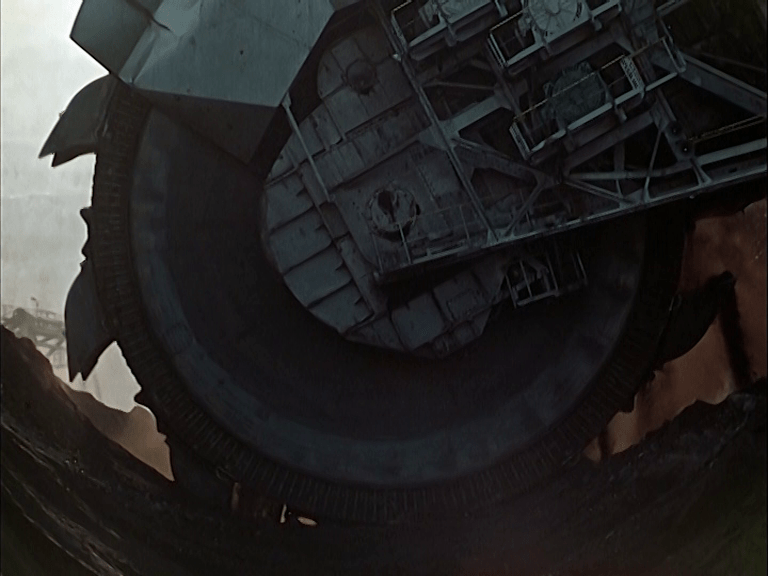
The primary mechanism for generating goodwill is the concept of the technological romance (Heßler, 2012, pp. 21–22). This narrative logic portrays technological progress as an inevitable force that is intrinsically linked to societal prosperity. Structural problems, environmental risks or potential failure are not factored into this logic.
In classic industrial films from the fossil fuel era – such as the film Braunkohlentagebau (1980) – this romanticism is expressed through a monumental machine aesthetic. Bucket-wheel excavators are depicted in panoramic shots and shown in relation to human scale. This makes them appear majestic and highly efficient. In these images, humans often appear merely as tiny, anonymous cogs in the machinery of production, which underscores the effortless mastery of nature (Przigoda, 2004, pp. 54–55).
The machine is transformed from a mere, potentially destructive tool into a promise of security of supply for an entire region. This brings to life the rational efficiency of industrial-capitalist imagery. This is also reflected in a nature-industry dialectic, in which technical installations are embedded within green landscapes.
The Harmonious Idyll of the Pseudo-Environment
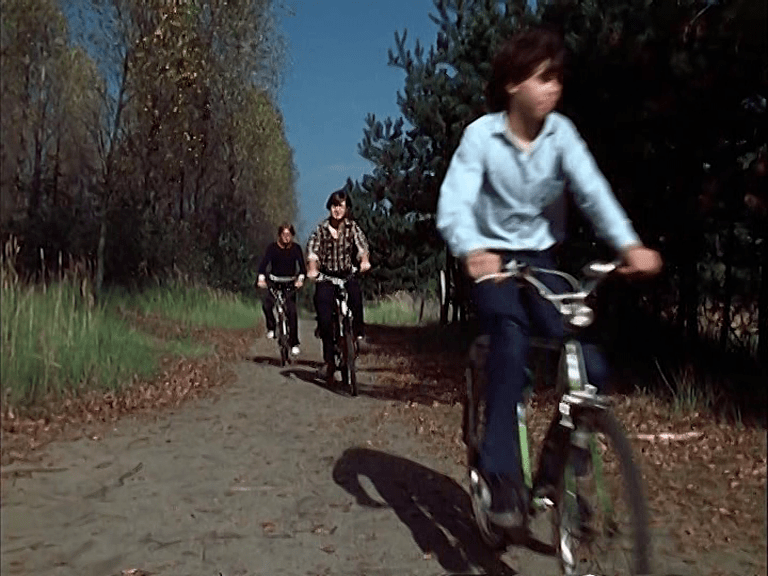
Since the physical reality of energy generation (noise, dust, large-scale earthworks) is too complex and confrontational to be portrayed in a positive light, public relations (PR) constructs a substitute reality: the pseudo-environment (Lippmann, 2018, p. 64). Through careful selection and the omission of “ugly” details, an image emerges that is so coherent in itself that we mistake it for the real world. The core principle here is the presentation of end results, not processes. The concept of the pseudo-environment is therefore found primarily in the contexts of land reclamation and resettlement.
Consequently, while we observe newly developed recreational areas in their pristine, finished states, the devastated landscape that preceded them is entirely erased. Resettled towns and villages are portrayed as exemplary, clean, and modern, while older, naturally evolved settlement structures are ignored.
This idyll is often accompanied by the motif of a future that spans generations. These artificial landscapes are often exclusively populated by laughing, playing children (Grob, 2004, p. 211) or animals.
By removing critical adult actors, the landscape is effectively depoliticised. Youth and innocence serve as a visual anchor, framing corporate activity as an act of social responsibility and sustainable stewardship.
Note: You can swipe through my Instagram breakdown of this specific case study (German language) directly above.
The Continuity of Heritage: From Industry to Social Media
The critical insight gained from deconstructing historical media is that these mechanisms are far from relics of a bygone era; they remain the timeless, structural apparatus of industrial communication.
Anyone scrolling through Instagram or LinkedIn today encounters exactly the same visual rhetoric. Whereas in the 1980s, smoking power stations in green fields were used to promote prosperity, modern PR for energy companies now stages gleaming solar parks and gently rotating wind turbines against picturesque, unspoilt sunsets.
The structural mechanics of the visual argument remain unchanged. Massive, land-consuming infrastructural interventions and the resource consumption they entail are concealed behind an aestheticised, sustainable pseudo-environment.
Research Insights & Working Paper
This case study is part of my ongoing research at the Visual Rhetoric Lab. You can download the full-length paper (German language) as a verified PDF resource for your references.

Download PDF
References
- Grob, N. (2004). Film der sechziger Jahre: Abschied von den Eltern. In W. Jacobsen, A. Kaes & H. H. Prinzler (Hrsg.), Geschichte des deutschen Films (2. Aufl., S. 207–244). Metzler.
- Hediger, V. & Vonderau, P. (2009). Record, Rhetoric, Rationalization: Industrial Organization and Film. In V. Hediger & P. Vonderau (Hrsg.), Films That Work: Industrial Film and the Productivity of Media (S. 35–49). Amsterdam University Press.
- Heßler, M. (2012). Kulturgeschichte der Technik. Campus Verlag.
- Lippmann, W. (2018). Die öffentliche Meinung: Wie sie entsteht und manipuliert wird (W. Ötsch & S. Graupe, Hrsg.). Westend.
- Mörtzsch, F. (1959). Die Industrie auf Zelluloid: Filme für die Wirtschaft. Econ-Verlag.
- Przigoda, S. (2004). Vom Bergarbeiter zum Bergtechniker: Zum Wandel des Arbeiterbildes in Industriefilmen des Bergbaus. In I. Prill (Hrsg.), Ferrum: Bd. 76 (S. 50–59). Georg Fischer AG.
- Smil, V. (2017). Energy and Civilization: A History. MIT Press.
- Screenshots from Braunkohlentagebau (1980), Historisches Konzernarchiv RWE.